Searches related to interior decoration and garden design represent a massive share of online queries, but the available content often remains compartmentalized: on one side, inspirations for the living room, on the other, ideas for the terrace. Thematic portals that organize these topics by sections offer a more structured entry point, provided you know what you are looking for.
Climate and regulatory constraints: what changes outdoor decor
Before choosing outdoor furniture or decorative planters, one factor now conditions all outdoor design projects: water availability and watering restrictions. During drought crises, watering of flower beds, lawns, and potted plants may be completely prohibited, except for certain recent plantings.
Several municipalities are gradually replacing traditional horticultural beds with perennials that are less water-demanding, and are generalizing mulching to retain soil moisture. This trend directly impacts garden decoration: plant compositions based on grasses, sedums, or lavenders are replacing water-hungry annuals.
Rainwater harvesting remains an option, but it is regulated. The collected water can be used for outdoor watering; however, it must not be used for drinking or personal hygiene. Installations connected inside the house must comply with separation and identification requirements for the networks. For a decor project that integrates fountains or ponds fed by rainwater, these constraints should be checked in advance.
Consulting the list of Deco and Garden sections allows for quick identification of which topics cover these regulatory aspects and which guides address materials suitable for outdoor spaces exposed to heat.
Xeriscaping and resilient gardens: the decor angle that catalogs ignore
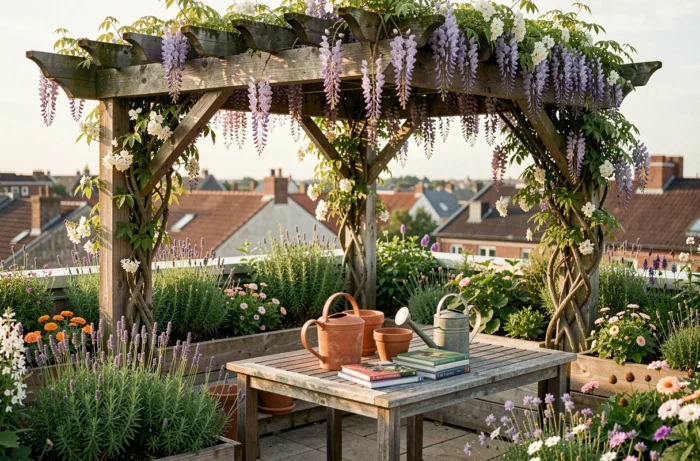
The term “xeriscaping” refers to the design of gardens that can remain aesthetically pleasing despite dry summers and repeated heat waves. It is not a trendy style; it is a technical response to a concrete problem.
In practical terms, a resilient garden is based on a few principles that directly influence decorative choices:
- The choice of local plants adapted to the soil, capable of surviving without regular watering, which alters the palette of colors and textures available throughout the seasons
- The use of minerals (gravel, dry stones, pebbles) as structuring decorative elements, partially replacing grass
- The reduction of impermeable surfaces, which leads to choices of slatted wooden terraces or slabs laid on a sand bed rather than poured concrete
- The integration of organic mulching as a visual component in its own right, rather than as a temporary cover-up
Cities themselves are experimenting with these approaches. Some are adapting their parks and gardens to heat waves by testing new species and rethinking layouts. What works at the scale of a public space can inspire a private garden, provided one accepts that the “perfect” catalog garden no longer exists in a changing climate.
Materials and outdoor furniture: wood, metal, resin against UV and humidity
The choice of materials for outdoor furniture and decorative elements is not solely a matter of style. Durability against UV rays, humidity, and temperature fluctuations determines the relevance of a purchase over several seasons.
Natural wood or composite wood
Wood remains the most sought-after material for terraces and garden furniture. European species (treated pine, oak, chestnut) age differently depending on exposure to sun and rain. Untreated wood grays within a few months, which can be a deliberate aesthetic choice or a disappointment depending on expectations.
Composite wood, a blend of wood fibers and resin, withstands the elements better but offers a less natural feel and appearance. Feedback varies on this point: some users appreciate the lack of maintenance, while others regret the visual uniformity.
Metal and woven resin
Aluminum dominates designer garden furniture thanks to its lightness and resistance to corrosion. Heavier steel is suitable for fixed structures (pergolas, arches). Woven resin mimics rattan with better UV resistance, but its quality varies significantly from one manufacturer to another.
For an outdoor space exposed to full sun, the choice of material determines the longevity of the chosen style. A low-end resin garden set may warp in two summers, while an aluminum and textilene set retains its shape and colors much longer.
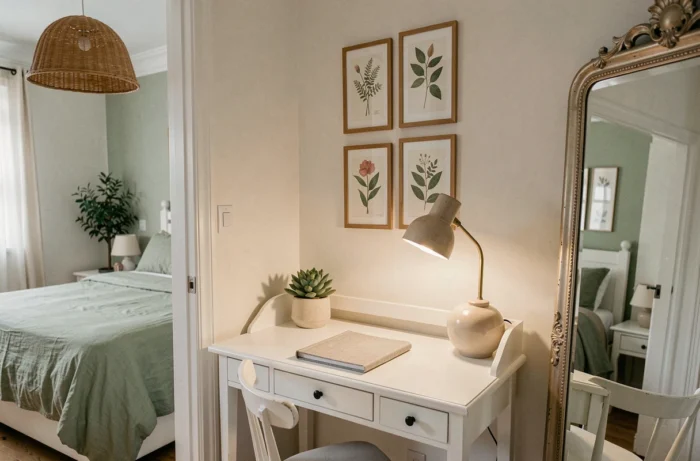
Indoor decor inspired by the garden: when the plant enters the house
The boundary between indoor and outdoor decoration is blurring in online searches as well as in practices. The sections covering these two realms reflect a deeper trend: integrating natural materials, plant colors, and live plants into indoor living spaces.
Stabilized plant walls, terrariums, and compositions of succulents on shelves are concrete responses to this need. Their maintenance varies greatly. A stabilized moss wall requires no watering, while a wall of live plants needs an integrated irrigation system and regular monitoring.
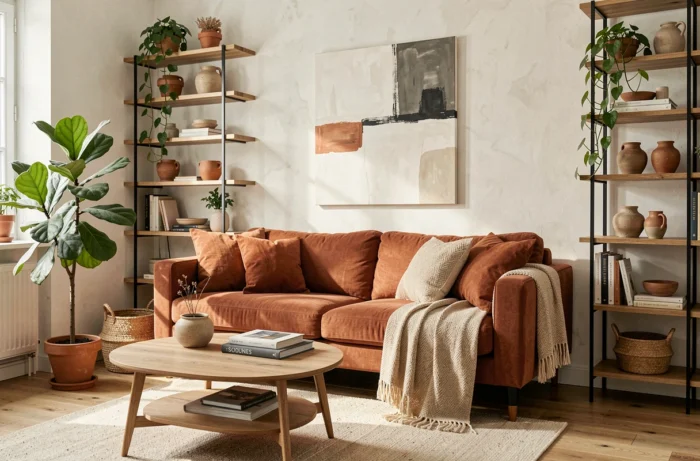
Terracotta, sage green, and ochre colors dominate the decor palettes that seek to create a visual continuity between the interior and the garden. These shades work equally well on a living room wall as on terrace pots, simplifying overall coherence for those arranging both spaces simultaneously.
The challenge remains to filter useful information from the mass of available content. A portal organized by thematic sections (furniture, plants, materials, style) offers a real time-saving compared to a scattered search across multiple sites. The available data do not allow for a conclusion that one format is universally better than another, but navigation by categories reduces the noise for those who already know which space they wish to transform.