In France, each resident consumes an average of 150 liters of drinking water per day. This figure, relatively stable since 2014, even saw a slight increase in 2022. Despite the growing spread of water-saving devices and awareness campaigns, national per capita consumption is no longer decreasing. This discrepancy deserves attention before compiling yet another list of green actions.
Why Water Consumption Stagnates Despite Individual Savings
After a peak in the mid-2000s and a low point in 2013, domestic consumption fluctuates within a narrow range. Field reports differ on the reasons for this stagnation: increased outdoor usage (pools, watering), a rise in living space per person, or simply a rebound effect where savings made in one area are compensated elsewhere.
This observation nuances the impact of lists of good practices. Turning off the tap while brushing teeth remains useful at the household level, but is not enough to influence a national trend. To accurately assess your own level, check Concept Maison for water consumption and compare your readings to French averages.
The issue of price now weighs as heavily as that of the resource. The average price of water in France reached €4.69/m³ in 2024, after a 28% increase since 2010. A further increase of 30 to 50% is anticipated by 2030-2035. Reducing consumption is no longer just an ecological reflex: it is also an increasingly concrete budgetary calculation.
Water Leaks After the Meter: What the Law Protects and What It Excludes
Leaks represent one of the most underestimated sources of waste. A dripping faucet or a faulty flush can result in dozens of lost liters each day. When the bill skyrockets, many households discover the existence of a capping mechanism provided by law.
The Principle of Capping at Double the Usual Consumption
When overconsumption results from a leak in a pipe located after the meter, the bill can be capped at double the usual consumption. This protection applies provided that the leak concerns a pipe (not a fixture) and that a repair certificate is submitted within one month.
However, leaks from toilets, faucets, appliances, or sanitary equipment are excluded from this provision. A toilet that leaks for weeks will not qualify for any capping. This exclusion is not always mentioned in the documents provided to subscribers, which exposes households to bills of several hundred euros without any recourse.
Detecting a Leak Before It Becomes Costly
Checking the meter during a period of vacancy remains the most reliable prevention method. Take a reading before going to bed or before leaving, then compare it upon return. If the numbers have changed without any appliances having run, a leak is likely.
- Check the flush mechanism at least once a quarter: a poorly adjusted float or a worn seal is enough to cause a continuous silent flow.
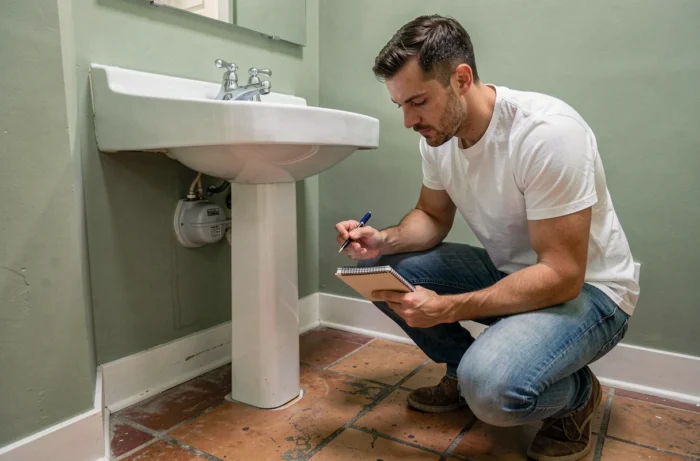
- Inspect the connections under the sink and basin, where leaks often go unnoticed for months.
- If your meter has a small dial or a leak detection wheel, observe it for a few minutes with the taps closed: any movement indicates a leak.
Reducing Flow Without Reducing Comfort: Equipment That Changes the Bill
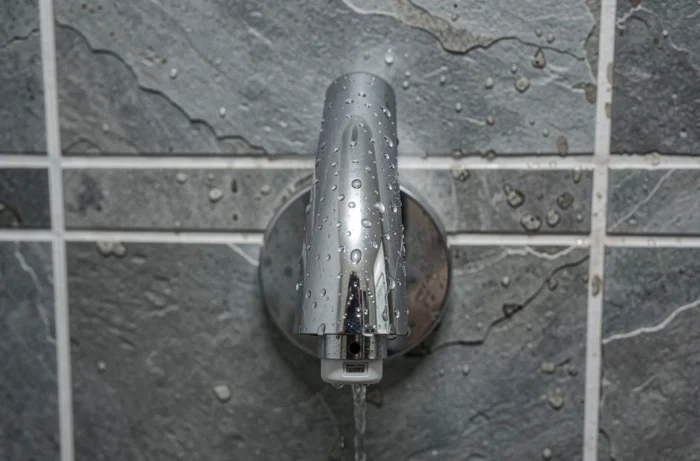
Not all water-saving devices are created equal, and their actual impact depends on the household profile. An aerator installed on a faucet mixes air with the water stream and reduces flow by 30 to 50% depending on the model. The cost is negligible, installation takes a few seconds, and the pressure sensation remains the same.
For the shower, water-saving showerheads work on the same principle. Switching from a long shower to one of less than five minutes halves consumption. Turning off the water while soaping, a gesture often mentioned, only has a measurable impact if the shower already exceeds several minutes.
On the toilet side, a dual-flush system reduces consumption in this area by half. Older tanks use about ten liters per use, compared to three to six liters with a dual-flow mechanism. This is the area where the investment pays off the fastest.
Daily Water Consumption: Areas Where Effort Really Counts
Competitors list eight to ten indistinct actions. However, three areas concentrate the bulk of the potential savings for a French household.
- Toilets account for a significant portion of daily consumption per person. It is the largest volume category and the easiest to optimize with suitable equipment.
- The shower is the second lever: a five-minute shower consumes about 35 liters, compared to triple that for a fifteen-minute shower or a bath.
- The washing machine and dishwasher represent an often-overlooked area. Running these appliances at full load rather than half reduces the number of cycles in a month, and thus cumulative consumption.
- Outdoor watering, in households with a garden, can represent a considerable volume in summer. Collecting rainwater or watering in the evening limits evaporation.
Acting on these four areas produces visible results as soon as the next bill. The rest (turning off the tap while brushing teeth, not letting water run to rinse vegetables) is common sense but has a marginal impact on a household’s annual balance.
The anticipated increase in water prices by 2030-2035 makes these choices increasingly concrete. A household that combines undetected leaks and outdated equipment faces a bill that could double in a few years, without any change in comfort. Checking installations and targeting the right areas for savings yields greater savings than the sum of small daily actions.