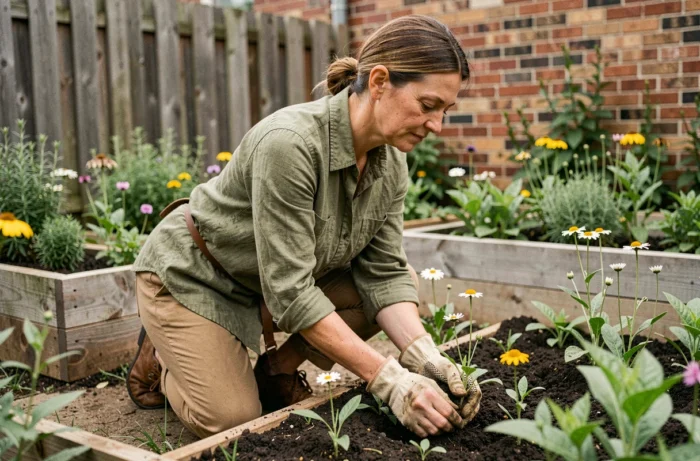
Biodiversity in France continues to decline, according to a report published by Vie publique in September 2026. Lists of individual actions circulate widely online, but they often overlook a key fact: recently, a European regulatory framework requires member states to restore their degraded ecosystems. Protecting nature on a daily basis is no longer limited to sorting waste or planting flowering plants.
European Regulation on Nature Restoration: What the Legal Framework Changes
Content addressing biodiversity on a daily basis rarely mentions the European regulation on nature restoration. This text, now legally binding, obliges each member state of the European Union to submit national plans for the restoration of degraded ecosystems.
In practical terms, this means that public policies must go beyond mere conservation. The active restoration of natural environments (wetlands, forests, waterways) becomes an obligation, not a voluntary goal. Local authorities, natural space managers, and farmers are directly concerned by these plans.
For individuals, this framework has a direct consequence: individual actions carry more weight when they align with local restoration priorities. Participating in a hedge replanting program in a municipality that has identified this need in its local biodiversity plan has more impact than an isolated action unrelated to the territory. Initiatives like those led by Eco Echo help to better understand how to articulate personal commitment and collective preservation dynamics.
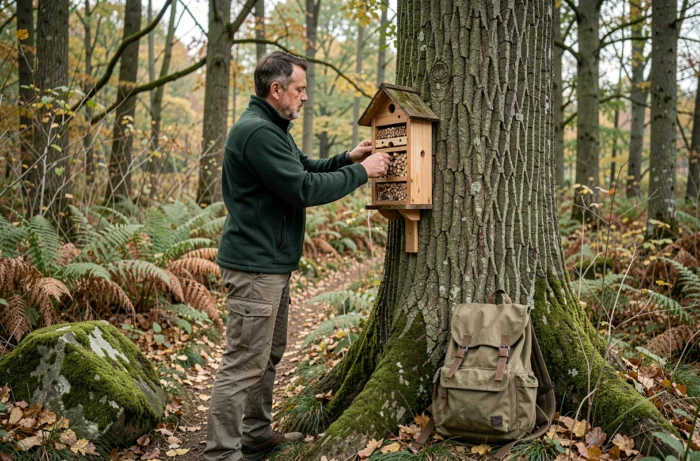
Citizen Science and Biodiversity: Counting Birds to Support Research
Among the concrete actions accessible to everyone, participation in citizen science programs remains underestimated. The 2025 report from the Garden Bird Observatory, published in January 2026 by the LPO and the National Museum of Natural History, shows an increase in participation and data submitted compared to 2024.
Counting birds from your garden or balcony directly feeds into national scientific monitoring. This data is used to measure the evolution of common species populations, a key indicator of ecosystem health. This is not a symbolic gesture: researchers use these surveys to guide conservation policies.
The approach requires no prior skills. Identification guides are provided by the LPO, and counts take place over defined periods (usually one weekend per season). Three points distinguish this action from usual gestures:
- It produces data usable by the scientific community, not just a local benefit
- It allows tracking the evolution of biodiversity in one’s own territory over the years
- It creates a direct link between citizens and research institutions like the National Museum of Natural History
Biodiversity in the Garden: Actions That Have a Measurable Effect on Local Ecosystems
Not all actions in the garden are equal. Installing a purchased insect hotel has a limited effect if the garden is mowed short and treated chemically. In contrast, certain practices genuinely alter the composition of species present on a plot.
Leaving an area fallow, even if small, significantly increases the number of pollinator insect species. Tall grasses, wildflowers, and dry stems provide nesting and feeding sites that maintained lawns do not offer.
Water management is another lever. Placing a simple shallow water container, with some stones to prevent insect drownings, creates a drinking point for local wildlife during dry periods. This action is even more meaningful as drought episodes multiply across French territory.
Nocturnal Lighting and Light Pollution
One aspect rarely addressed in gardening guides: light pollution is one of the major causes of the decline of nocturnal insects. Reducing or eliminating outdoor lighting after a certain hour limits the disorientation of moths and other nocturnal pollinators. It is a cost-free action with documented effects on local biodiversity.
Food and Consumption Choices: Beyond Organic, Looking at Supply Chains
The reflex to “buy organic” is often presented as the primary food lever in favor of biodiversity. Available data do not allow for concluding that the organic label alone guarantees a systematic benefit for ecosystems. Agricultural practices vary greatly from one farm to another under the same label.
Two criteria deserve more attention:
- Geographical origin: a product grown locally in a polyculture-livestock system supports a diversity of habitats in the territory, even without organic certification
- Seasonality: consuming seasonal fruits and vegetables reduces pressure on ecosystems stressed by greenhouse crops or long-distance imports
- Protein choices: reducing the share of meat from intensive farming decreases the demand for agricultural land dedicated to animal feed, land that could be returned to natural habitats
These consumption choices do not replace agricultural policies, but they send an economic signal to supply chains. Consumer demand remains one of the few levers for rapid transformation of agricultural practices.
The multiplication of individual actions will not be enough to halt the decline of biodiversity in France. The European regulation on nature restoration now imposes a timeline and measurable objectives on states. For individuals, the challenge is no longer just to “do their part,” but to ensure that every action, from counting birds to food choices, fits into a collective dynamic that goes beyond the garden or balcony.