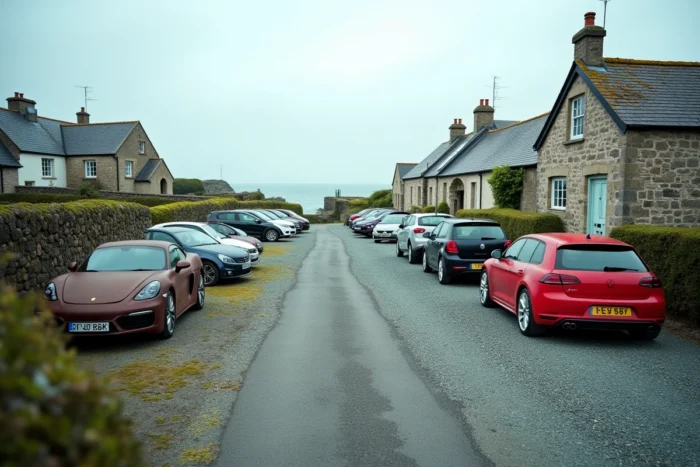
Parking in Saint-Cado is not just about finding a free spot. The layout of the hamlet of Nichtarguer, the width of the access roads, and the administrative disputes surrounding the main parking area condition any approach strategy to the site. We recommend treating the parking issue as a planning parameter, not as an on-site improvisation.
Legal status of the parking area in Saint-Cado: what changes in 2026
The administrative court of appeal in Nantes confirmed on July 3, 2026, the irregularity of the parking area located along the ria of Étel. This landscaped area, developed by the municipality of Belz in 2013, is situated within the 100-meter coastal strip, a non-buildable zone under the Urban Planning Code.
The administrative tribunal of Rennes had already ordered the restoration of the land to its natural state. The 2026 decision on appeal confirms this obligation. In practical terms, the sustainability of this area is no longer guaranteed in the medium term.
For visitors, this means that the number of available spots closest to the stone bridge may decrease from one season to the next. We observe that this situation fuels confusion in guides that continue to mention a main parking area without specifying its status. A recent overview is provided by the parking options in Saint Cado according to AF News Travel, which incorporates these regulatory developments.
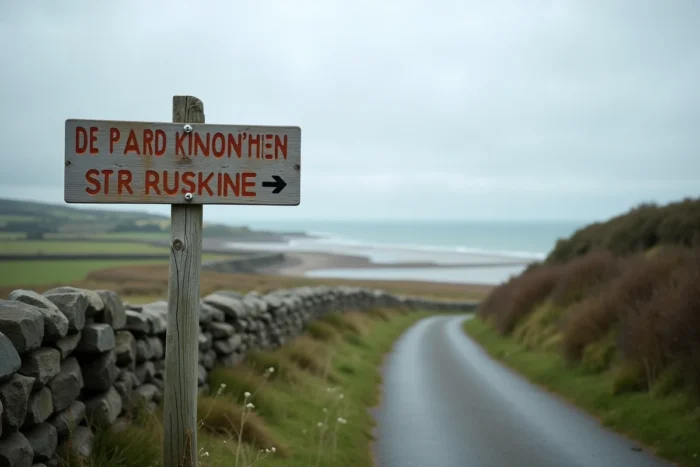
Parking in the background: the parking lot on the road to Pont-Lorois
Parking in the background is the most reliable solution during high season. The parking lot located across from the supermarket, on the road to Pont-Lorois, offers a significantly higher capacity than the contested area of Nichtarguer. The trade-off is a walk of about fifteen minutes to the islet.
This walk along the ria presents real scenic interest. For those visiting Saint-Cado with a mindset of strolling rather than a quick stop, the compromise is favorable. The pressure on the narrow streets of the hamlet decreases, and the risk of getting stuck behind a poorly parked vehicle disappears.
Time slots and seasonal saturation
Field reports converge on one point: arriving before 9 AM in summer remains the only way to park near the bridge. Saturation occurs in the middle of the day, between 11 AM and 4 PM, and then eases in the late afternoon.
This pattern is predictable and stable from year to year. We recommend that visitors who value immediate proximity time their arrival for this morning slot, or aim for the end of the day to enjoy the low-angle light on the ria of Étel.
Camper vans and long vehicles in Saint-Cado: size constraints
The access roads to Nichtarguer are not sized for vehicles longer than six meters. The tight turns, lack of turnaround areas, and limited road width make any maneuver risky with a camper van or long converted van.
- Camper vans must park on the outskirts (Pont-Lorois parking or dedicated areas in the municipality of Belz) and then walk to the islet.
- Compact vans like converted vans can navigate the alleys, but finding a suitable spot for their length remains uncertain during the season.
- No specific service area (dumping, water) is available in the immediate vicinity of Saint-Cado.
Do not attempt to drive down to the bridge with a long vehicle. Turning around is sometimes impossible, and residents do not appreciate maneuvers that block access for long minutes.

Pedestrian access from parking areas: concrete markers
From the Pont-Lorois parking lot, the path to Saint-Cado follows the departmental road for a few hundred meters before branching off towards the hamlet of Nichtarguer. The route is flat and poses no particular difficulty, even with a stroller.
From the contested area (as long as it remains accessible), the stone bridge is less than five minutes on foot. The passage over the bridge is narrow: two people walking side by side find it difficult to pass, creating pedestrian bottlenecks during peak summer hours.
Walking circulation on the islet
The islet itself can be traversed in about twenty minutes. The alleys are exclusively pedestrian. The Romanesque chapel and the view of the ria are the two main stopping points. There is no marked loop: you return by the same bridge.
- Wear suitable shoes for the uneven cobblestones and wet passages at high tide.
- Dogs on a leash are tolerated, but the limited space makes cohabitation tense during high traffic.
- No drinking water or public sanitary facilities are available on the islet.
Off-peak periods and alternatives to high season for visiting Saint-Cado
Visitor numbers in Saint-Cado are highly seasonal. Outside of July-August, parking poses almost no problem, including in the area of Nichtarguer. The months of May, June, and September offer ideal conditions: favorable light, moderate crowds, and available spots at any time.
Winter completely transforms the atmosphere of the site. The ria of Étel under a low sky, without visitors, offers a radically different experience from the summer postcard. Parking is then free and unconstrained.
The parking issue in Saint-Cado remains linked to the outcome of the dispute over the main area. As long as the restoration to its natural state is not executed, spots exist but their maintenance is legally fragile. Planning access by incorporating the Pont-Lorois parking as a default option remains the most robust strategy, regardless of the season.