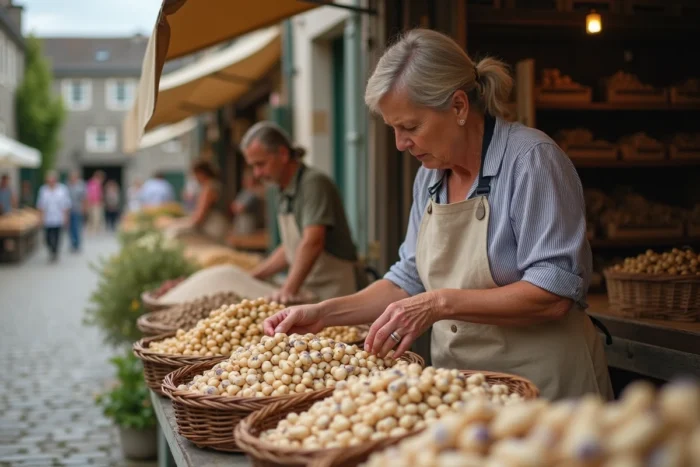
The Paimpol coco bean is the only fresh French vegetable to benefit from a protected designation of origin (PDO). Its production area is limited to a coastal strip of Trégor-Goëlo, in Côtes-d’Armor, and its harvest extends from August to the end of October. This restricted geographical and seasonal framework determines where, when, and in what form it can be obtained.
Seasonality of Paimpol PDO coco and forms available year-round
Fresh Paimpol coco beans, in their pods, are only available at markets during their harvest season, which lasts about three months each year. Outside of this window, purchases shift to other formats: jars of plain or cooked coco beans, dried coco beans packaged in bags, or frozen ones.
This distinction influences the choice of sales point. An outdoor market in Northern Brittany will offer fresh pods in September, but not in February. A gourmet grocery store or an online shop will ship jars year-round. Adapting your search to the calendar avoids disappointments.
The prices of coco-type beans vary by week and region, which explains sometimes significant price differences between a Parisian greengrocer and a Paimpol stall. The retail price directly depends on the volatility of wholesale markets, especially at the beginning and end of the season when volumes fluctuate.
To identify short supply chains and producers who practice direct sales of Paimpol coco on Conseil Jardin, the ideal period remains the peak season, between mid-August and mid-October, when the supply is the widest.
Buying fresh Paimpol coco: local markets and farmers’ cooperative
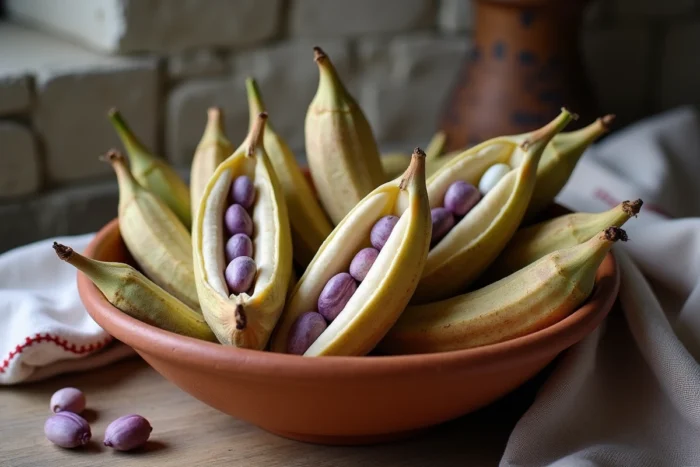
The most direct route to obtain fresh coco beans in pods is through the weekly markets of Trégor-Goëlo. Paimpol, Tréguier, Lézardrieux, or Pontrieux host producers who sell their harvest on the same day or the day after collection. Freshness is verified by the pod: soft, slightly moist, without brown spots.
The cooperative Les Maraîchers d’Armor has opened a direct sales store called Coco & Co in Paimpol. This place brings together the fruits and vegetables of its members, including Paimpol PDO coco in conventional, pesticide-free, and organic farming. Local processed products can also be found there: coco hummus, preserves, Coco’Apéro.
- Outdoor markets of Trégor-Goëlo (Paimpol, Pontrieux, Tréguier): fresh pods available only from August to October, prices vary according to the week of harvest.
- Coco & Co, store of the cooperative Les Maraîchers d’Armor in Paimpol: full range (fresh, preserves, derived products), open in season and beyond for processed products.
- Farms selling directly on the Côtes-d’Armor coastline: identifiable via local producer directories, they sometimes offer on-site picking.
Prioritizing a purchase at the beginning of the week after harvest ensures well-filled pods. Coco beans harvested late in the season, in October, tend to have more floury grains, which are better suited for soups than for warm salads.
Paimpol coco in supermarkets and gourmet shops outside Brittany
During the season, some national chains stock fresh Paimpol PDO coco in their fruit and vegetable aisles. Supply depends on regional purchasing centers, and availability varies from one store to another. A greengrocer’s section in Rennes is more likely to offer it than a hypermarket in Toulouse.
Off-season, supermarkets mainly offer dried coco beans or preserves from Breton brands. Jars of cooked coco beans à la bretonne (with onions, bacon, bouquet garni) are the most common format found in gourmet shops across France. These processed products can be stored for several months and allow for cooking a Breton dish without calendar constraints.
For gourmet shops in Paris or Lyon, Paimpol coco often arrives via wholesalers specializing in regional products. The additional cost related to transport and intermediation is reflected in the final price, which can be significantly higher than direct purchases in Brittany.
Ordering Paimpol coco online: Breton shops and canneries
Several canneries and online shops based in Brittany ship Paimpol coco in various forms. You can find plain PDO coco in jars, smoked bacon veloutés, dried coco beans in bags, or preparations combining coco and confit sausage.
Online purchasing offers a clear advantage for buyers far from the production area. Delivery to a pickup point usually costs a few euros. A few points to watch out for before ordering:
- Check for the mention PDO Paimpol coco on the label. A “coco bean” without designation can come from any region.
- Compare the drained net weight of the jars, not just the gross weight. Differences between brands can sometimes be significant.
- For dried coco beans, soaking time varies depending on the packaging. A bag of Breton dried coco beans generally requires an overnight soak before cooking in a pot.
Artisanal Breton canneries focus on regional recipes: coco à la bretonne, coco velouté with buckwheat, coco hummus. These processed products remain the only reliable way to buy Paimpol coco year-round, regardless of your place of residence.
Recognizing a true Paimpol PDO coco at purchase
The designation protects a semi-dry bean, harvested in pods, cultivated exclusively in the defined geographical area around Paimpol. The grain is ivory white, kidney-shaped, with a thin skin that distinguishes it from classic bulk coco beans.
At a market, the pod should display characteristic red-purple streaks. In jars or bags, the PDO logo (red and yellow circle of the European Union) must appear on the packaging. Its absence indicates a generic product, even if labeled “Breton coco.”
The texture after cooking is the final test. A true Paimpol PDO coco yields a melting, almost creamy grain that crushes under a fork without becoming mushy. This particular texture is due to harvesting at the semi-dry stage, before the grain hardens completely.
Paimpol coco remains a niche product, linked to a specific terroir and a short harvest window. Whether the purchase is made at a Trégor market in September or through an online cannery in the middle of winter, the mention PDO on the label remains the only reliable marker to guarantee its origin.