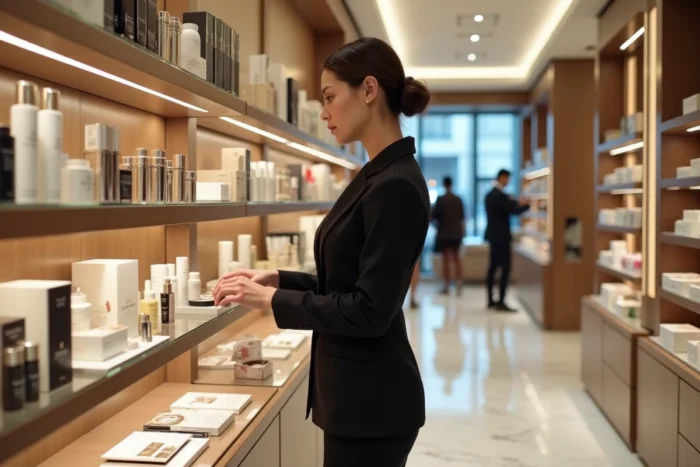
The beauty market relies on a small number of specialized distributors that concentrate a massive share of cosmetic, skincare, and makeup sales. Sephora, a subsidiary of the LVMH group, has dominated this segment for several decades thanks to a global network of stores and a very wide selection of brands. However, other retailers hold strong positions, sometimes in niches that Sephora covers less well.
Beauty Distribution Models: What Really Distinguishes the Players
The competition in beauty product distribution is not just a comparison of catalogs. The business model of each retailer determines its ability to attract certain consumer profiles and negotiate with brands.
Sephora operates as a selective multi-brand retailer: the retailer chooses the references it distributes, develops its own ranges (Sephora Collection), and controls the in-store customer experience. This selective positioning gives it a strong negotiation leverage but also creates a blind spot: brands that do not meet its selection criteria find refuge with more open competitors.
To better understand Sephora’s competitors in beauty, one must look at how each structures its offer and targets its consumers.
Ulta Beauty, the main American rival, combines prestige beauty and mass-market beauty in the same sales space. This coexistence of very different price ranges attracts a broader clientele. Douglas, the European leader, focuses on a portfolio of premium brands and a dense physical presence in Germany, Italy, and Spain. Nocibé, acquired by Douglas, maintains a distinct identity in France with a slightly more accessible positioning.
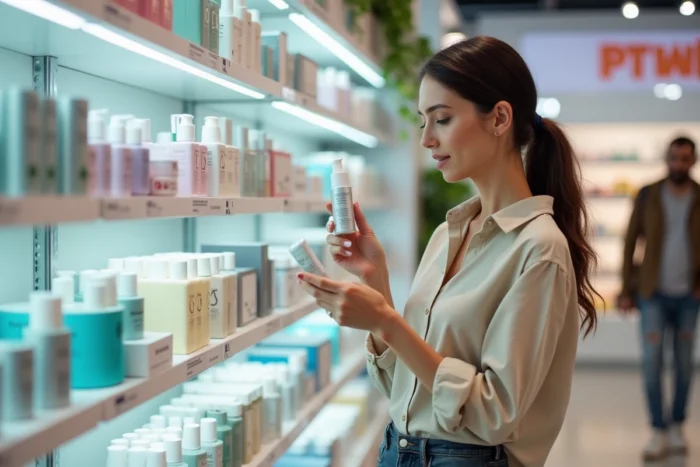
Clean and Sustainable Cosmetics: A Differentiation Ground Against Sephora
The focus on clean beauty and sustainable cosmetics has become a real competitive lever. Several retailers use the proportion of organic, vegan, or low environmental impact brands as a central argument for their positioning, particularly in continental Europe.
Sephora has developed its own label “Clean at Sephora” to identify products formulated without certain controversial ingredients. However, smaller concept stores and some regional chains had already reduced silicones and synthetic ingredients in their own ranges well before this initiative. This time lag gives them a credibility advantage among engaged consumers.
Douglas and Nocibé are also integrating more certified organic or vegan brands into their assortments. European regulatory pressure on certain cosmetic components accelerates this trend: retailers heavily exposed to international brands must undertake more extensive reformulations and delistings than green-oriented pure players, which slows their adaptation.
Criteria for Differentiation Among Retailers in the Sustainable Segment
- Proportion of certified organic or vegan brands in the catalog, used as a visible indicator in-store and online
- Policy for reformulating own ranges (removal of silicones, parabens, synthetic dyes) and timeline for compliance
- Transparency on ingredient traceability and the environmental footprint of referenced products
- Programs for collecting and recycling cosmetic packaging at points of sale
Artificial Intelligence and Beauty Personalization Among Sephora’s Competitors
Sephora was a pioneer in using digital tools in-store, with its connected mirrors and skin diagnostic app. But AI applied to beauty personalization is rapidly advancing among its rivals.
Several competitors are deploying recommendation algorithms that analyze skin type, skincare preferences, and purchase history to propose tailored routines. This approach goes beyond simple filtering by product category: it aims to replicate the advice of an expert seller, at scale, across digital channels.
The challenge is not just technological. AI personalization alters the balance of power between retailers and brands. A retailer capable of precisely recommending a serum suited to a given consumer profile becomes a prescriber, not just an intermediary. Sephora maintains an edge in this area thanks to its data-rich loyalty program, but players like Ulta Beauty are investing heavily to close the gap.
Emerging European Brands: The New Battleground
The race for emerging brands is redefining the balance of power among distributors. The beauty market increasingly celebrates new entrants, whether they are American brands that have gone viral on social media or references from K-Beauty that appeal to Western consumers.
In this dynamic, Europe remains a major hub for cosmetic creation but is less visible than American or Asian brands. Sephora no longer wants to just distribute future successful brands: the retailer also seeks to identify and support young European creators before they break through on a large scale.
This strategy addresses an imbalance identified among new entrants. Sephora’s competitors do not all have the means to establish a support program of this magnitude. Douglas is focusing more on acquisitions and exclusive partnerships with already established brands. Smaller retailers are concentrating on local sourcing, emphasizing made in France or made in Germany as a selection argument.
What Retailers Look for in an Emerging Brand
- A clear positioning in a specific segment (anti-pollution skincare, minimalist makeup, men’s cosmetics) rather than a generalist range
- An engaged community on social media, proof of traction among consumers even before being listed in stores
- Formulations compliant with the latest European regulatory requirements, reducing the risk of rapid delisting
The competition among beauty distributors is no longer solely about the number of references on the shelves. The ability to detect brands before they go viral, to integrate sustainability criteria into product selection, and to personalize advice through AI outlines a market where each retailer seeks to become the reference prescriber for its consumer segment.