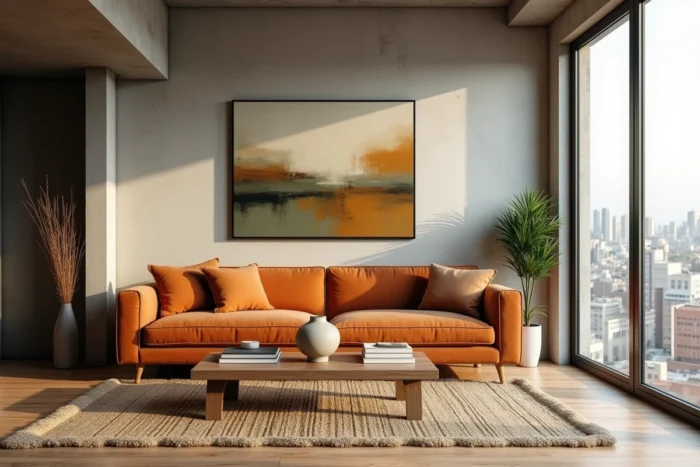
Interior decoration in 2026 is no longer just about choosing a sofa and a wall color. Expectations are shifting towards overall atmospheres, where texture, light, and even acoustics contribute to the experience of a space. Ultra-glossy finishes are declining, bio-sourced paints are gaining ground, and the open kitchen to the living room is no longer an automatic reflex. This context reshapes the concrete choices to be made room by room.
Sensory decoration: when the living room is designed with the ears
Recent trends push interior decoration beyond the visual. Manufacturers like Ecophon Clipso are developing solutions that simultaneously address acoustics, light, and materials to create more sensory and immersive spaces, even in standard rooms like a living room or an office.
Specifically, this involves wall panels or stretched ceilings capable of absorbing sound reverberations, combined with integrated lighting that diffuses indirect light. The result alters the perception of volume without touching the layout.
For a living room, this approach requires rethinking the order of priorities. Instead of starting with furniture, one begins with acoustic comfort (thick rugs, heavy curtains, textile wall coverings), then adjusts the light (dimmers, multiple sources at different heights), and the choice of sofa or coffee table comes last. Several specialized resources in decoration on the Blog du Bricoleur site detail this type of layered approach.
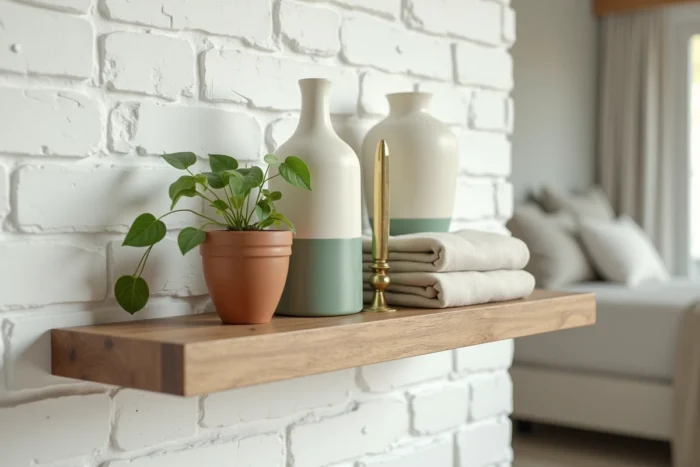
Eco-responsible paint for a healthy interior: beyond green marketing
Paint remains the fastest transformation lever for a room. In 2026, the issue is no longer about choosing between matte and satin, but about distinguishing a truly eco-friendly paint from a mere marketing claim.
The technical criterion to check is the VOC (volatile organic compounds) level, ideally below 1 g/L. At this level, emissions in indoor air become negligible. Bio-sourced paints go further by replacing petrochemical resins with plant or mineral-based binders.
The labels to look for on the can are the European Ecolabel, the NF Environment mention, or certifications specific to specialized brands. Field feedback varies on this point: some bio-sourced paints offer coverage comparable to classic ranges, while others require an additional coat, which affects the budget.
Trendy colors and matte finishes in 2026
On the palette side, the shades dominating this year favor natural and soft tones. Matte finishes are establishing themselves in the living room as well as in the bedroom, as they hide surface imperfections and absorb light instead of reflecting it.
Ultra-glossy surfaces are considered outdated, especially in the kitchen, where fingerprints and constant maintenance have become tiresome. Matte or lightly satin finishes replace them on furniture facades and backsplashes.
Kitchen and dining room: the retreat of the fully open kitchen
For a decade, the open kitchen to the living area has been presented as the norm. User feedback nuances this model. Cooking odors, the noise of appliances, and the constant visual clutter are pushing many households to reintroduce partial separations.
The most common solutions:
- A workshop-style glass partition between the kitchen and the living room, allowing light to pass through while containing odors and noise
- A wooden or metal screen, less airtight but sufficient to visually delineate the kitchen space
- A high island with integrated storage, serving as a low partition between the preparation area and the dining room
The closed kitchen is not making a comeback, but the semi-open kitchen is gaining ground. This configuration allows for maintaining conviviality while isolating nuisances.
Decor ideas by room: bedroom, accent wall, and small spaces
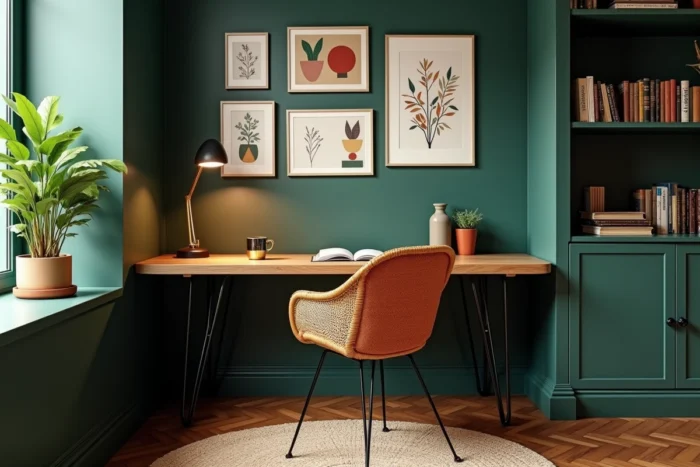
The bedroom remains the room where the sensory approach makes the most sense. An accent wall in dark matte paint (deep green, terracotta, midnight blue) behind the headboard is enough to transform the ambiance without overcrowding the space.
For small spaces, the mirror remains an effective tool as long as it is positioned correctly. Placed opposite a window, it doubles the natural light. Placed opposite a solid wall, it produces no enlarging effect. This placement detail makes all the difference.
Textures and natural materials on the wall
Textured wallpaper (linen effect, raffia, stone) is experiencing a resurgence of interest. It adds a tactile dimension that paint alone cannot offer. Natural materials like raw wood, cork, or woven bamboo are also used as decorative panels on a single wall, to avoid a generalized “cabin” effect.
The principle that works: limit strong materials to one surface per room. A natural stone wall in the living room, a wooden ceiling in the bedroom, a tiled floor in the entryway. Multiplying materials in the same space creates visual confusion.
Sustainable design and second-hand furniture: what the market confirms
The interior decoration market is evolving towards longer cycles. Second-hand furniture, long confined to flea markets, is being structured through specialized platforms. The argument is not only ecological: a vintage piece brings a character that no mass-produced furniture can replicate.
Points to check before buying second-hand furniture:
- The structural condition (joints, legs, hinges) rather than the surface condition, which is easier to restore
- The dimensional compatibility with the available space, as antique furniture is often deeper than current standards
- The possible presence of old chemical treatments (lead varnish on pre-1950 furniture), which require professional stripping
Sustainable design does not mean giving up modernity. It is about combining old pieces with understated contemporary elements, maintaining a coherence of palette and proportions. A 1960s armchair works alongside a current minimalist lamp if both share a clean line.
Original interior decoration relies less on the accumulation of ideas than on the hierarchy of choices. Addressing acoustics before furniture, checking the composition of a paint before its color, testing a mirror placement before drilling: these reversed priorities compared to usual reflexes produce more durable and personal results.