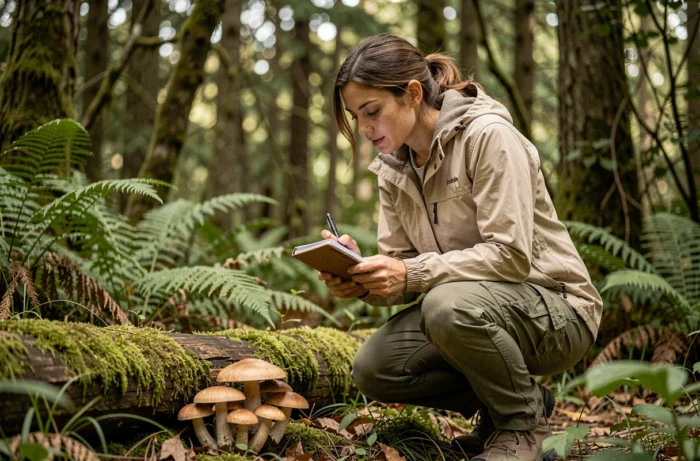
A field observation that can be utilized relies on a protocol, not on a chance encounter. The Biodiversity Information System (SIB) defines a naturalist data point as the association of a taxon, a georeferenced location, a date, one or more observers, and a method. Traveling in the wild without integrating this framework amounts to accumulating photographic memories without reusable scientific value.
Protocol for Collecting Naturalist Data While Traveling
Most travel guides limit themselves to advice on discretion and patience. The real lever for transforming a nature outing into a useful contribution is the rigor of the survey.
A minimal protocol while traveling involves systematically noting the target species that were not detected. This absence data, often overlooked by travelers, allows databases to distinguish between an absent species and one that was simply not searched for. Without it, a survey loses a significant part of its interpretative value.
Each observation benefits from being associated with the duration of the survey, weather conditions, and the type of habitat traversed. Comparing multiple environments (riparian zones, scrubland, coastal wetlands) along the same route produces much richer datasets than an inventory limited to a single spot known for its fauna.
Mediterranean regions like Apulia, documented notably by Puglia Unpacked, concentrate contrasting habitats (calcareous steppes, coastal wetlands, centuries-old olive groves) over short distances, making them particularly suitable for this type of comparative survey.
Field Data Entry Tools
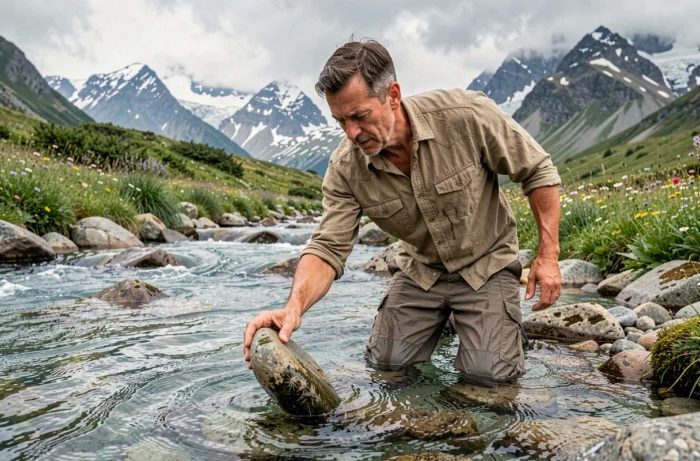
Prefer participatory science applications that specify their taxonomic validation chain and data sharing policy. The SIB federates data produced within the framework of public policies and aims for their consistency and reusability. An isolated identification submitted on a platform without a validation protocol remains difficult to exploit.
- Note the taxon at the most precise level you can manage: it is better to indicate “Sylvia sp.” than to assign an uncertain species name to a warbler seen for three seconds.
- Geolocate each observation with the GPS coordinates from your phone, ensuring that the displayed accuracy is within twenty meters.
- Photograph the diagnostic criteria (wing pattern, leaf venation, ventral coloration) rather than seeking aesthetic framing.
- Record the method: direct visual observation, listening for calls, ground traces, presence indicators (droppings, food remains).
Choosing Habitats and Timing Observations While Traveling
The type of habitat matters more than the search for a flagship species. A traveler who targets only the large raptor or the iconic mammal misses the majority of observable biodiversity, concentrated in the entomofauna, herpetofauna, and vascular flora.
While traveling, structuring your days around habitat transitions multiplies contacts. Ecotones (forest edges, wetland borders, interfaces between crops and fallow land) often present greater species richness than homogeneous environments.
Adapting the Time Slot to the Taxonomic Group
Birdwatching during migration focuses on the first two hours after sunrise. Mediterranean reptiles are active in morning thermoregulation on exposed rocky substrates. Bats can only be observed at dusk, with an ultrasonic detector.
Returning to the same point at different times allows for documenting the phenology of a site over a full day. This type of temporal survey, rare among hurried travelers, produces data particularly sought after by natural area managers.
Seasonality and Observation Pressure
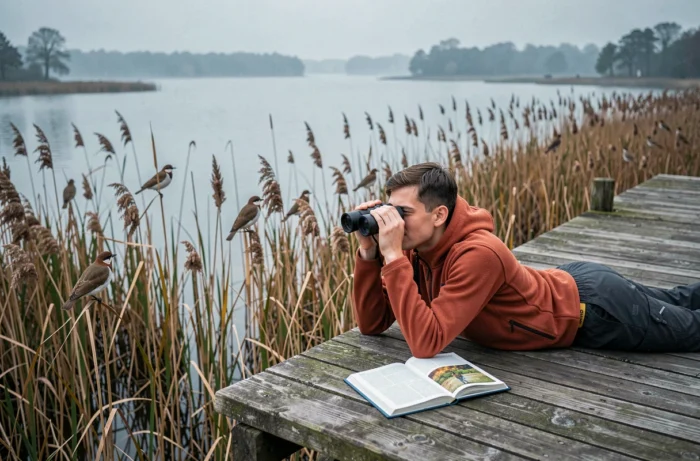
National parks and nature reserves experience peaks in attendance that alter wildlife behavior. Observing outside tourist time slots (early morning, weekdays, outside school holidays) reduces disturbance and increases the likelihood of contacts with elusive species.
In winter, activities like snowshoeing can disturb wildlife during their energy-resting phase. Mountain ungulates and alpine galliforms are particularly vulnerable to winter disturbance, as each forced flight costs them hard-to-replenish fat reserves.
Ethics of Observation and Regulation of Protected Species
Intentionally disturbing a protected species constitutes an offense in most European legislations, even when the disturbance is limited to causing repeated flights.
For observing nesting birds, the minimum distance depends on the species and the nesting stage. Raptors during incubation abandon the nest if an observer approaches beyond a threshold that varies by species, sometimes by several hundred meters.
Wildlife Photography and Flight Distances
Ethical bird photography is based on a simple principle: it is the animal that must come to the photographer, not the other way around. Fixed hide techniques, set up well before the animal arrives at its feeding or resting site, allow for obtaining images at close range without causing stress.
- Never use playback (broadcasting recorded calls) during the breeding season: this diverts the bird’s energy towards territorial defense at the expense of feeding the young.
- Avoid drones near nesting colonies, raptor roosts, and winter gathering areas.
- In marine and underwater environments, respect regulatory distances from marine mammals and do not touch attached organisms (corals, gorgonians, sponges).
Contributing to Databases and Valuing Travel Observations
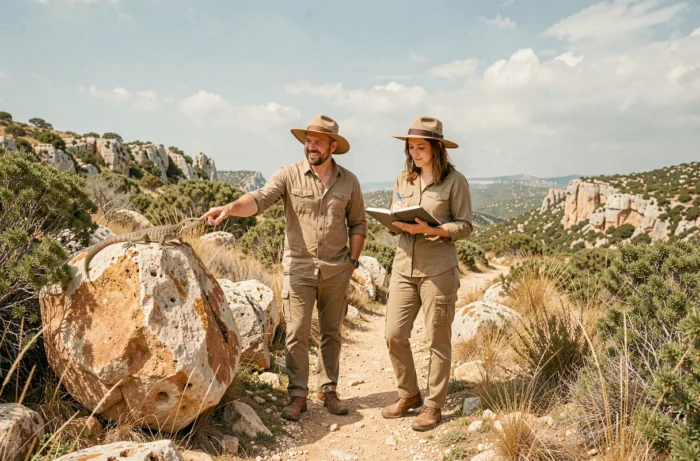
We observe that the majority of observations made while traveling remain in personal notebooks or photo galleries without ever feeding into naturalist databases. The difference between a memory and a data point lies in three elements: the standardization of the entry format, validation by a peer or an algorithm, and submission to an open reference framework.
National participatory science platforms (like INPN or local equivalents depending on the visited country) accept contributions from travelers, provided they adhere to the entry protocol. Before leaving, check if the destination country has a reporting portal compatible with your usual entry tools.
What Data is Truly Useful to Managers
Protected area managers rarely lack data on emblematic species. What they lack are surveys of invertebrates, common flora, and invasive exotic species. Reporting the presence of an invasive plant on a coastal trail or documenting pollinator activity on an agricultural plot often brings more value than yet another photo of a flamingo.
The quality of a biodiversity observation while traveling is not measured by the number of likes or the rarity of the photographed species. It is measured by the possibility, for someone who was not there, to reuse this data ten years later.