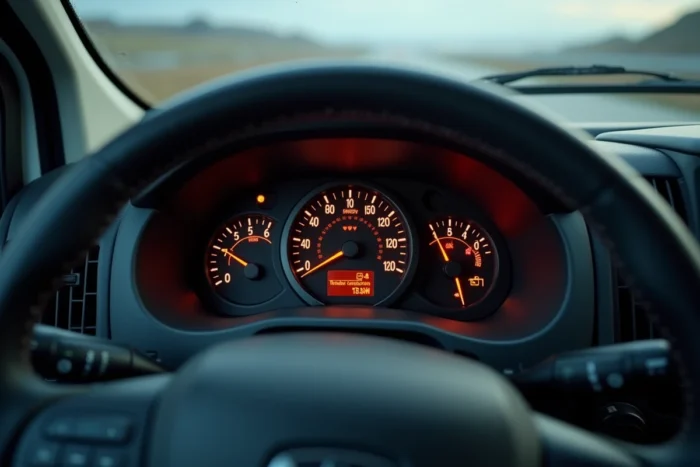
The dashboard of the Iveco Daily displays icons that vary according to the model year, type of engine, and body style of the vehicle. The same warning light can indicate a simple maintenance operation on a 2014 panel van and a critical alert on a 2022 refrigerated chassis-cab. This context-dependent nature explains why generic reading grids, designed for the general automotive market, often mislead drivers of commercial vehicles.
Understanding the meaning of the dashboard lights on the Iveco Daily requires going beyond simple symbol recognition to incorporate the logic of prioritization embedded by the manufacturer.
Iveco Daily Lights on Modified Vehicles: What Standard Guides Omit
Iveco Dailys rarely leave the factory in their final configuration. Dump trucks, flatbeds, refrigerated vans, ambulances, tow trucks, or vehicles converted into campers receive equipment that engages the electrical system and engine management in ways very different from a standard van.
On a Daily equipped with a refrigeration unit, the battery charge warning light may illuminate without the alternator being faulty. The electrical consumption of the auxiliary unit pulls the voltage below the detection threshold during intensive cooling phases. The classic diagnosis (testing the alternator, checking the belt) misses the real issue.

Vehicles fitted with a power take-off add a layer of complexity. Activating the power take-off changes the engine speed and can trigger alerts related to the diesel after-treatment system, notably the particulate filter regeneration light. The driver sees an orange light and thinks there is a malfunction, while the control unit has simply suspended the automatic regeneration because the engine speed does not match the programmed conditions.
For Dailys converted into campers, field reports vary on the behavior of the AdBlue level light after adding a second auxiliary battery or a 12V/230V converter. Some owners report ghost alerts that disappear after a prolonged highway driving cycle.
Red, Orange, Green Hierarchy: Engine Alerts and Safety on the Daily
The alert system of the Daily relies on a three-level color code, but the operational meaning of each level differs from what is found on a sedan.
- Red: vehicle stop recommended. The coolant temperature light, the engine oil pressure light, and the brake alert are included. On a utility vehicle loaded with several tons, ignoring a red overheating light for a few kilometers can cause engine seizure, the cost of which far exceeds that of an on-site repair.
- Orange or yellow: diagnosis needed without immediate urgency. The engine light (check engine), the AdBlue/SCR light, and the preheating alert fall into this category. The vehicle can generally drive to the workshop, but power may be limited by the control unit in degraded mode.
- Green or blue: system active, no anomalies. Turn signals, low beams, high beams. These lights confirm normal operation and require no intervention.
A often overlooked point: the general alert light (yellow triangle with exclamation mark) is not a standalone indicator. It almost always accompanies a text message on the instrument cluster screen when the Daily is equipped with one. Without reading this message, the icon alone does not allow for a diagnosis.
AdBlue Light and Diesel After-Treatment: The Most Misunderstood Alert
Dailys equipped with Euro 6 engines feature an SCR (selective catalytic reduction) system that consumes AdBlue to treat nitrogen oxides. The associated light, often represented by an icon of a tank with a droplet, generates frequent confusion.
When this light turns orange, it indicates a low AdBlue level. The driver then has a certain mileage before the system goes into degraded mode, and then blocks the engine restart. A Daily that won’t restart due to AdBlue is not mechanically broken, but the practical result is the same: the vehicle is immobilized.
However, if the AdBlue light is flashing or accompanied by the engine light, the problem goes beyond just the fluid level. The AdBlue quality sensor, the SCR injector, or the dosing module may be at fault. These components require a fault code reading via a diagnostic tool compatible with the Daily’s protocol.
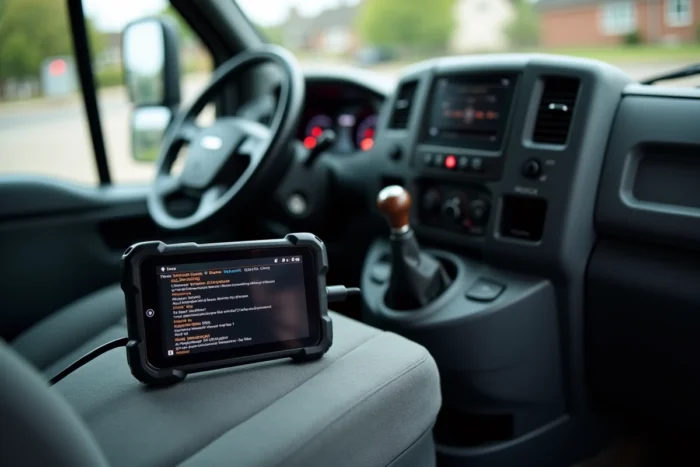
Electronic Diagnosis and Limitations of OBD Scanners on Iveco Daily
Public diagnostic scanners read standardized OBD-II codes (P0xxx family), but a significant portion of the faults specific to the Daily uses manufacturer codes (P1xxx, P2xxx, and beyond) that these basic tools do not interpret. The driver receives a raw code without a description, or worse, a generic description that does not correspond to the Iveco logic.
Tools compatible with the Iveco diagnostic network access parameters absent from the standard OBD protocol: SCR system status, particulate filter regeneration counter, voltage of each NOx sensor. Without the appropriate tool, the orange engine light remains a black box.
Software updates for the engine control unit represent another blind spot. Iveco regularly publishes patches that modify the triggering thresholds of certain lights. A Daily whose software has not been updated may display alerts that the manufacturer has corrected in recent firmware versions.
Oil Pressure and Temperature Lights: Two Indicators Never to Ignore
The oil pressure light (red canister symbol) and the coolant temperature light share one characteristic: when they illuminate while driving, the reaction time is measured in seconds, not minutes.
On a loaded Daily diesel engine, a drop in oil pressure can cause damage to the crankshaft bearings and the timing system within a few hundred meters. Shutting off the engine immediately is the only appropriate response to this red light.
The temperature light operates differently. It may briefly illuminate during prolonged load increases (such as climbing a highway ramp with a loaded trailer) and then turn off if the thermostat and cooling circuit are functioning correctly. If the light remains on after a minute of stabilized driving, stopping is imperative.
These two lights remind us that reading the dashboard lights of an Iveco Daily is not a theoretical exercise. On a utility vehicle whose immobilization costs a day’s work, knowing how to distinguish a cosmetic alert from a mechanical emergency directly affects the final bill.