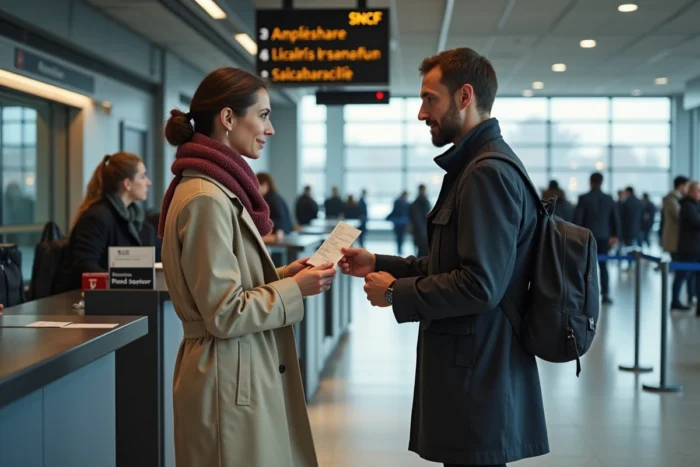
A SNCF train ticket is nominative. The name printed on the ticket corresponds to the traveler who must take the train, and SNCF does not offer a feature to change this name after purchase. This rule, often discovered at the time of a typing error or a change of traveler, generates frustrating situations for thousands of passengers each year.
Nominative SNCF ticket: why name changes are blocked
SNCF Voyageurs’ policy on this point is categorical: the ticket is personal and non-transferable. This wording, found in the general sales conditions, means that a transport title cannot be transferred from one traveler to another, even within the same family.
The law n° 2025-379 of April 28, 2025, relating to security in rail transport has strengthened the framework for combating fraud and identity theft. The strict correspondence between the actual identity of the passenger and the transport title has become a matter of increased control. This legislative tightening makes the emergence of a flexible option for changing the name on an SNCF ticket very unlikely in the near future.
Controllers on board TGV Inoui and Ouigo trains can verify the traveler’s identity. In case of a mismatch between the name on the ticket and the identification document, the passenger risks a fare adjustment or even boarding denial.

Name error at booking: concrete remedies
Since SNCF does not allow name corrections, the only technical solution is to cancel the existing ticket and then purchase a new one in the correct name. The financial consequences depend on the type of fare chosen at purchase.
- Flexible fare tickets (Second or First Freedom on TGV Inoui) are exchangeable and refundable without fees, allowing for a name error correction without financial loss by canceling and immediately repurchasing.
- Discount fare tickets (Prem’s, Ouigo low prices) are often non-exchangeable and non-refundable, or refundable with a deduction. Repurchasing a ticket at this stage involves losing all or part of the initial amount.
- Tickets purchased through third-party platforms (Trainline, Omio) follow SNCF’s conditions, but the cancellation process goes through the platform’s customer service, which extends the timeframes.
Speed of response is crucial. The sooner the cancellation request is made after purchase, the higher the chances of finding a ticket at the same price. On highly demanded routes, low fares disappear within hours.
Exceptional windows for free exchanges on TGVs
External circumstances sometimes create opportunities. During the heatwave episodes of summer 2024, SNCF Voyageurs made exchanges and refunds free on TGV Inoui, Ouigo, and Intercités tickets, across all fares, for a limited period.
In practice, these climate windows allowed for bypassing the block: a traveler could cancel their ticket with the wrong name for free, then purchase a new one in the correct name. These measures remain sporadic and unpredictable, linked to weather alerts or major traffic disruptions.
Monitor SNCF announcements during disrupted periods
The SNCF Connect app and the company’s official social media are the most responsive channels to learn about these exceptional measures. A traveler facing a name error on a non-refundable ticket should keep an eye on these announcements rather than consider their loss as final.
Comparison with air travel: an increasing flexibility gap
The European Parliament adopted in 2025 a strengthening of air passenger rights, including advancements on name correction after booking. Several airlines already allow the modification of the passenger’s name for a moderate fee, and some low-cost carriers permit ticket transfers to another traveler.
SNCF offers no equivalent mechanism. This gap is even more visible as trains gain market share on domestic French routes. The commercial success of rail, regularly highlighted by SNCF itself, does not come with an evolution of flexibility conditions regarding name issues.
The specific case of companions for disabled persons
Since 2022, the inability to change the name of the companion on an SNCF e-ticket has been contested. Several associations specializing in disability have raised this specific point with SNCF Voyageurs, as a change of companion (for medical or organizational reasons) requires the complete cancellation of the ticket. The policy has not been officially relaxed to date.
This rigidity poses a concrete accessibility problem: a person with a disability whose companion changes at the last minute faces additional costs or the impossibility of traveling, while the main traveler remains the same.
Precautions before purchasing a nominative train ticket
Prevention remains the most reliable lever. A few reflexes reduce the risk of error at the time of booking on SNCF Connect or via the mobile app.
- Check that the first name and last name exactly match the traveler’s identification document, including accents and hyphens.
- Create a distinct traveler profile for each person likely to take the train, to avoid mix-ups during a group booking.
- Prefer exchangeable fares for trips where the group composition is not final, even if the price is higher.
A ticket in the wrong name has no value in case of identity control. The additional cost of a flexible fare is fully justified when the traveler’s identity is not yet certain at the time of purchase. SNCF does not provide any formal tolerance for name discrepancies, even minor ones.